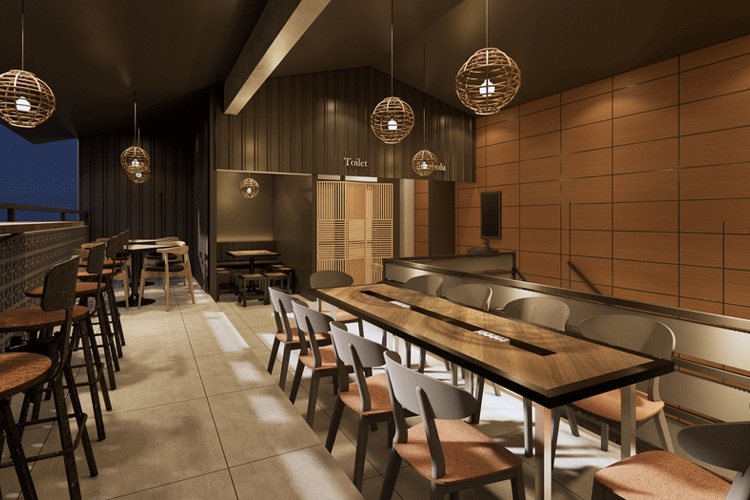
Restaurant furniture has to accomplish much more than simply filling a dining room. Every chair, table, bar stool, and outdoor piece becomes part of the guest experience while also functioning as equipment that must withstand repeated commercial use. That is why restaurant furniture sourcing should be approached as a strategic business decision rather than a simple shopping exercise.
Restaurant owners and interior designers have to balance appearance, durability, comfort, available space, budget, maintenance, and the operational demands of the concept. Making those decisions without the right product knowledge can result in furniture that looks impressive on opening day but fails to perform as expected once the restaurant becomes busy.
Working with a hospitality furniture specialist can make the sourcing process more efficient by connecting the design vision with the practical requirements of operating a restaurant.
What Restaurant Furniture Sourcing Really Means
Restaurant furniture sourcing involves identifying and selecting commercial furnishings that fit the restaurant’s design, operational requirements, space, budget, and expected level of use. It goes beyond choosing attractive products from a catalog.
A successful sourcing strategy considers how furniture will actually function once the restaurant opens. A dining chair in a busy restaurant may be used by many guests throughout a single day. Tables are repeatedly cleaned, moved, and exposed to food and beverages. Bar stools experience frequent movement and weight shifts, while outdoor furnishings face an entirely different set of environmental conditions.
Restaurant owners therefore need to consider both aesthetics and performance.
A well-planned furniture package typically evaluates:
- Restaurant concept and overall design direction
- Expected guest traffic and frequency of use
- Available dining room and bar space
- Furniture dimensions and seating capacity
- Commercial-grade materials and construction
- Comfort and guest experience
- Cleaning and maintenance requirements
- Indoor versus outdoor applications
- Budget and long-term replacement costs
- Product availability and project timeline
Considering these factors early helps restaurant owners avoid selecting furniture based primarily on appearance or initial price.
Start With the Restaurant Concept, Not the Furniture Catalog
One of the most effective ways to improve restaurant furniture sourcing is to begin with the restaurant itself.
A fast-casual concept has different furniture requirements from an upscale dining room. A neighborhood café may prioritize flexible seating and smaller tables, while a cocktail bar may require a combination of bar stools, lounge seating, and dining-height options.
Before choosing individual products, define the atmosphere you want to create and how the space needs to operate.
Furniture should support that objective.
For example, commercial restaurant seating is available in many materials, heights, styles, and configurations. The best choice is not necessarily the most visually dramatic chair. It is the chair that complements the design while providing the comfort, durability, dimensions, and functionality required by the restaurant.
Commercial Furniture Is Different From Residential Furniture
Furniture designed for a private home does not typically experience the same frequency of use as furniture in a restaurant.
Commercial dining environments place continuous demands on seating and tables. Chairs are moved repeatedly. Guests lean against chair backs and armrests. Tables are cleaned throughout the day. Bar stools are pushed, pulled, and repositioned. Furniture finishes encounter spills, cleaning products, and regular contact.
Restaurant furniture sourcing should therefore prioritize products intended for commercial hospitality environments.
Construction, materials, joints, finishes, upholstery, and overall product design should all be evaluated according to the intended application.
Paying less for a product that needs premature replacement may ultimately be more expensive than investing in furnishings selected for the demands of the space.
Match Restaurant Seating to How Guests Use the Space
Seating affects more than appearance. It influences guest comfort, circulation, seating capacity, and the overall dining experience.
Restaurant owners should consider how long guests are expected to remain seated. A quick-service operation and an upscale restaurant have different comfort requirements. Likewise, a bar stool, café chair, dining chair, and lounge chair each serve a different purpose.
Dimensions matter as well.
Oversized chairs can reduce seating capacity or make aisles feel crowded. Chairs that are too small may not provide the desired comfort or visual presence. Bar and counter seating must also be coordinated with the corresponding surface height.
The objective is to find a balance between comfort, capacity, style, and operational efficiency.
Select Tables as Part of the Complete Seating Plan
Tables should not be sourced independently from the rest of the dining environment.
Table size and shape influence the number of guests who can be seated, how easily tables can be combined, circulation between dining areas, and the overall flexibility of the floor plan.
Restaurant owners can explore commercial restaurant furniture options while considering how tabletops, bases, chairs, and bar seating work together as one coordinated package.
Round, square, and rectangular tables each offer different advantages. Smaller tables can provide flexibility for changing party sizes, while larger tables may better support family-style dining or group seating.
Material selection also matters. The appropriate tabletop depends on the concept, expected use, maintenance requirements, and whether the table will be placed indoors or outdoors.
Consider the Total Cost Instead of Only the Purchase Price
Budget is naturally an important part of restaurant furniture sourcing, but the lowest initial price does not automatically represent the best value.
A more useful question is: What will this furniture cost the business over its useful life?
A restaurant owner should consider durability, maintenance, cleaning, replacement availability, and expected service life alongside the purchase price.
This is where direct relationships with factories and importers can become valuable. Working through an experienced hospitality furniture supplier can provide access to a broader range of products and price levels, allowing operators to compare alternatives based on actual project requirements rather than choosing between a limited number of retail options.
Plan Furniture Sourcing Around Your Project Timeline
Furniture should be addressed early in a restaurant opening or renovation.
Waiting until construction is nearly complete can dramatically reduce available choices. Products may be in stock, temporarily unavailable, imported, made to order, or subject to different production and delivery schedules.
Interior designers and restaurant owners should identify essential furniture categories early and establish which selections have the longest potential lead times.
A practical sourcing sequence includes:
- Define the restaurant concept and furniture requirements
- Confirm floor plans and approximate quantities
- Establish the furniture budget
- Select seating, tables, bar stools, and outdoor furnishings
- Review materials, dimensions, colors, and finishes
- Confirm product availability and expected timelines
- Coordinate ordering with the opening or renovation schedule
- Plan for future replacement or expansion needs
This process helps prevent furniture from becoming an unexpected bottleneck near the end of a project.
Don’t Overlook Outdoor Restaurant Furniture
Outdoor dining requires a separate sourcing strategy.
Furniture placed outdoors must be selected for environmental exposure and commercial use. Materials, finishes, frames, tabletops, and upholstery should be appropriate for the intended environment.
Décor-N-More offers commercial outdoor restaurant furniture including seating and dining options developed for hospitality applications.
Outdoor spaces should still feel connected to the restaurant’s overall design. The objective is to create visual consistency while choosing materials suited to the different conditions outside.
Why a Furniture Sourcing Partner Adds Value
Restaurant owners frequently know the experience they want to create but may not know which construction, materials, manufacturers, or furniture categories provide the best path to achieving it.
Interior designers may have a strong visual concept but need additional sourcing options that fit the project’s budget or availability requirements.
This is where a hospitality furniture consultant can provide significant value.
Instead of simply processing an order, a knowledgeable supplier can help compare alternatives, identify practical considerations, and match products with the operational requirements of the restaurant.
Effective restaurant furniture sourcing connects design, operations, budget, and product knowledge.
Restaurant Furniture Sourcing With Décor-N-More Hospitality Furnishings
At Décor-N-More Hospitality Furnishings, restaurant furniture is not treated as a one-size-fits-all purchase. The company works with restaurant owners, interior designers, hotels, and hospitality professionals to help identify furnishings that make sense for the actual project.
By working directly with leading factories and importers, Décor-N-More can source commercial seating, restaurant tables, bar stools, café and bistro furniture, outdoor furnishings, and other hospitality solutions across a wide range of styles and budgets.
The company’s consultative approach helps customers evaluate design, durability, functionality, availability, and price together. Whether the project is a budget-conscious restaurant opening, an existing dining room refresh, or an upscale hospitality design, Décor-N-More provides the product knowledge and sourcing experience needed to make more informed furniture decisions.
Frequently Asked Questions
Where do restaurants typically source commercial furniture?
Restaurants commonly source furniture through commercial hospitality furniture suppliers, manufacturers, importers, designers, and specialized furniture consultants. Working with a hospitality-focused supplier can simplify the process by providing access to multiple furniture categories and helping operators evaluate products according to commercial requirements.
What furniture does a restaurant usually need?
The exact furniture package depends on the concept, but most restaurants require dining tables, chairs, table bases, bar or counter stools, and sometimes waiting, lounge, café, or outdoor seating. The appropriate combination should be based on the floor plan, service model, seating capacity, and guest experience.
How early should restaurant furniture be ordered?
Furniture selection should begin as early as practical during the restaurant design or renovation process. Availability varies by product, and custom or imported furnishings may require additional production and transportation time. Planning early also gives owners and designers more flexibility when comparing alternatives.
What should I look for when selecting restaurant furniture?
Look beyond appearance and evaluate whether the furniture is appropriate for commercial use. Consider construction, durability, dimensions, comfort, materials, cleaning requirements, available space, expected traffic, budget, and whether replacement pieces may be needed later.


Leave a Reply